


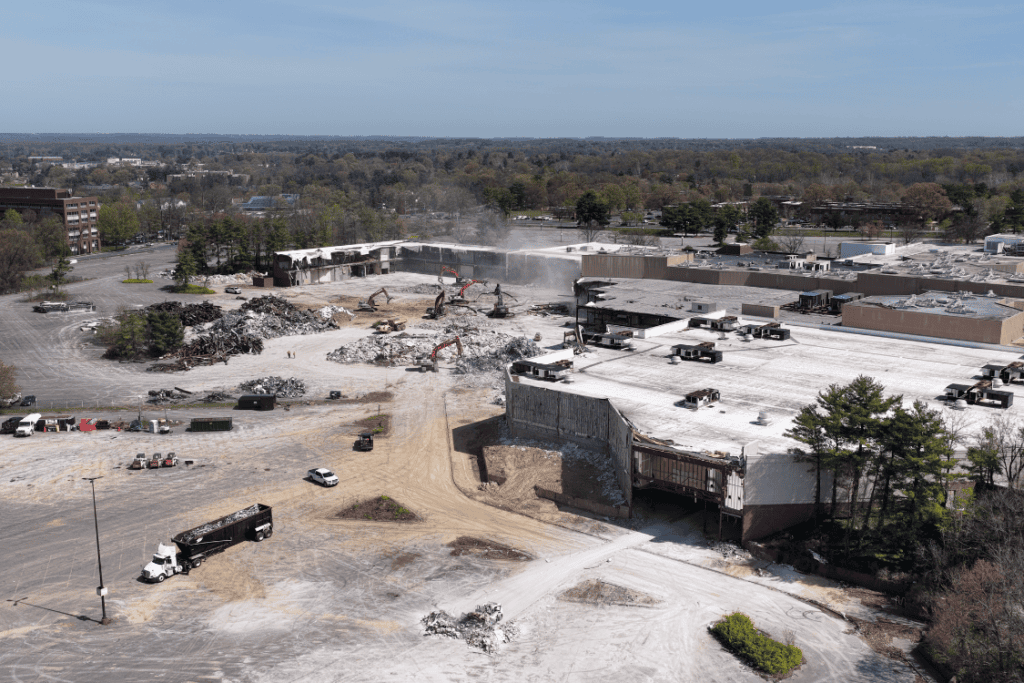
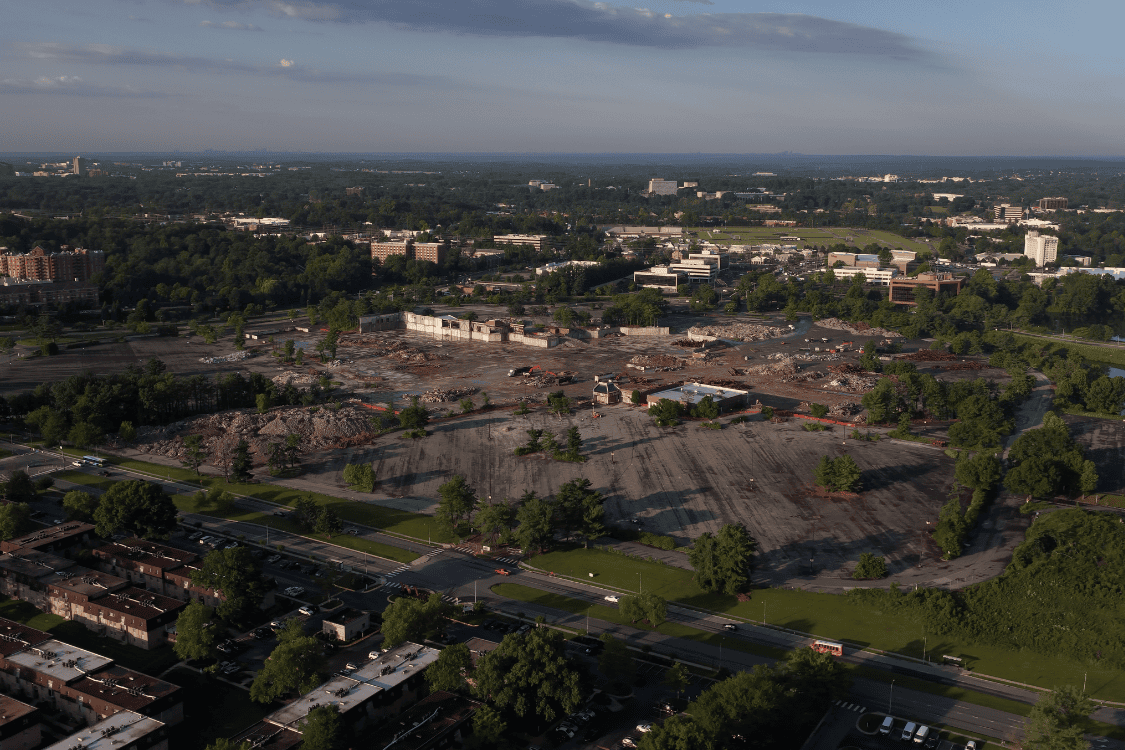
For 45 years, Lakeforest Mall was part of the fabric of Gaithersburg, Maryland. It opened in 1978 and closed in the spring of 2023, spanning just over a million square feet on roughly 100 acres and anchored by four major department stores.
Now the site is being reimagined entirely, with the help of ISI Demolition.

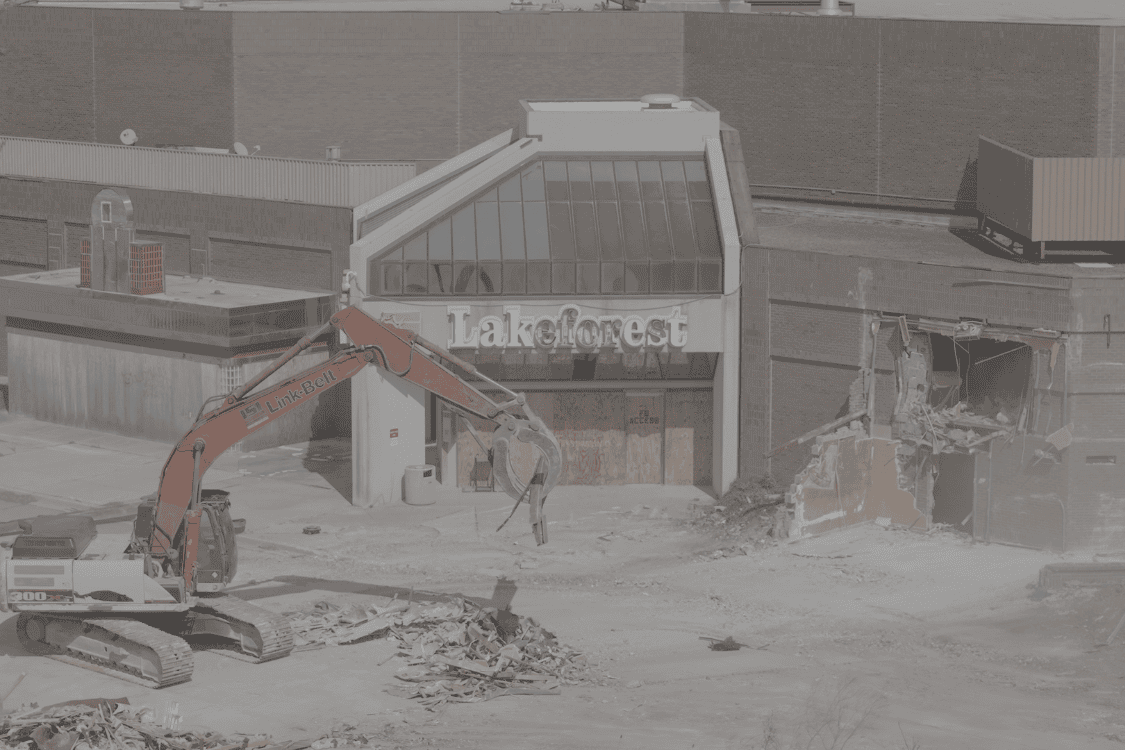
Developers WRS Inc. and CW Strittmatter, Inc. broke ground on a $1.2 billion mixed-use redevelopment there, bringing new retail space preleased to tenants like The Home Depot, Sprouts Farmers Market, and Landmark Theatres, more than 1,600 new housing units, 35 acres of green space, and an upgraded transit center.
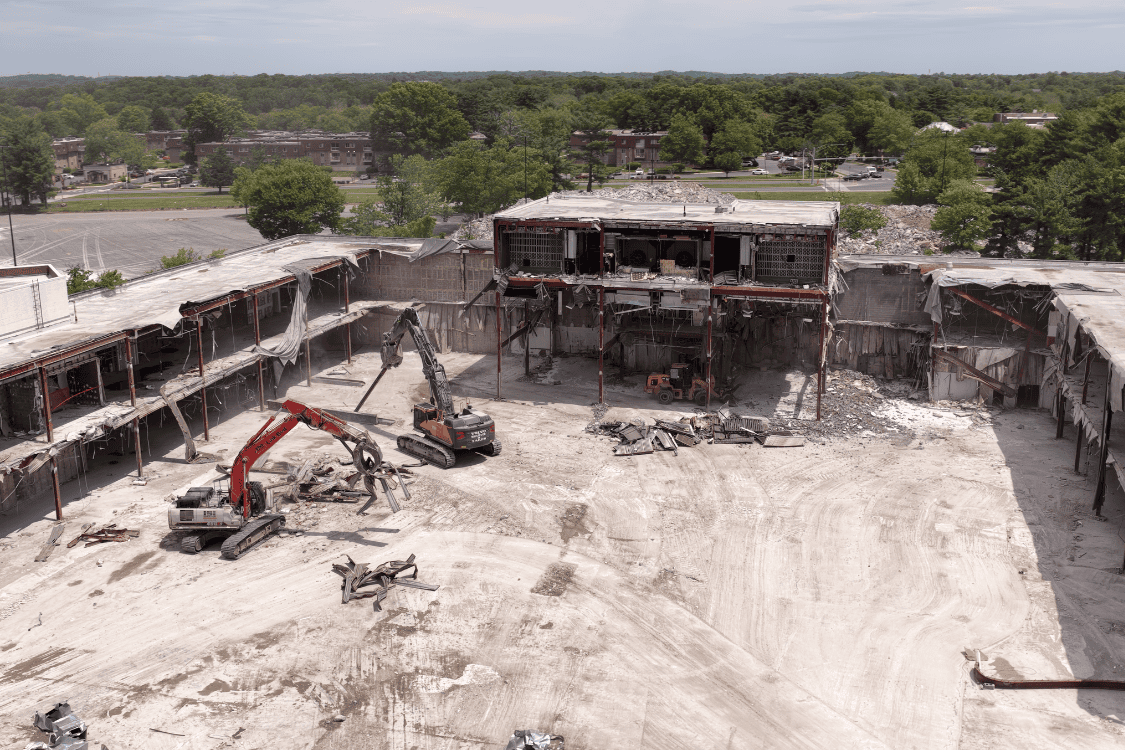
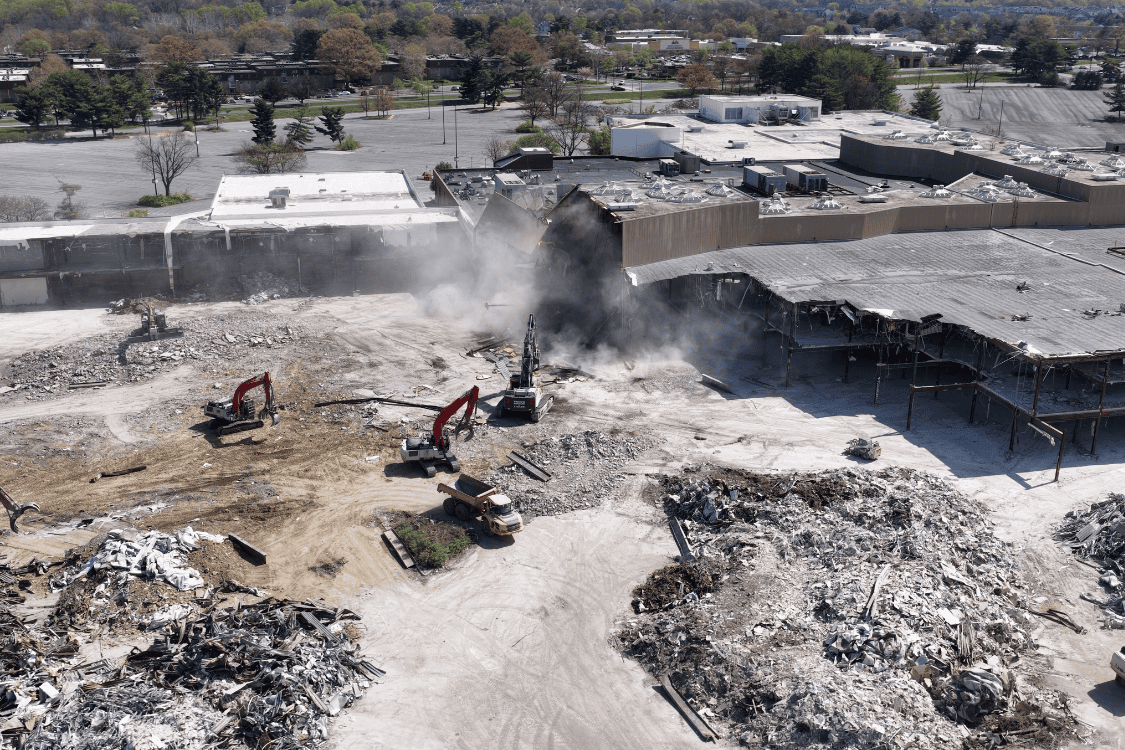
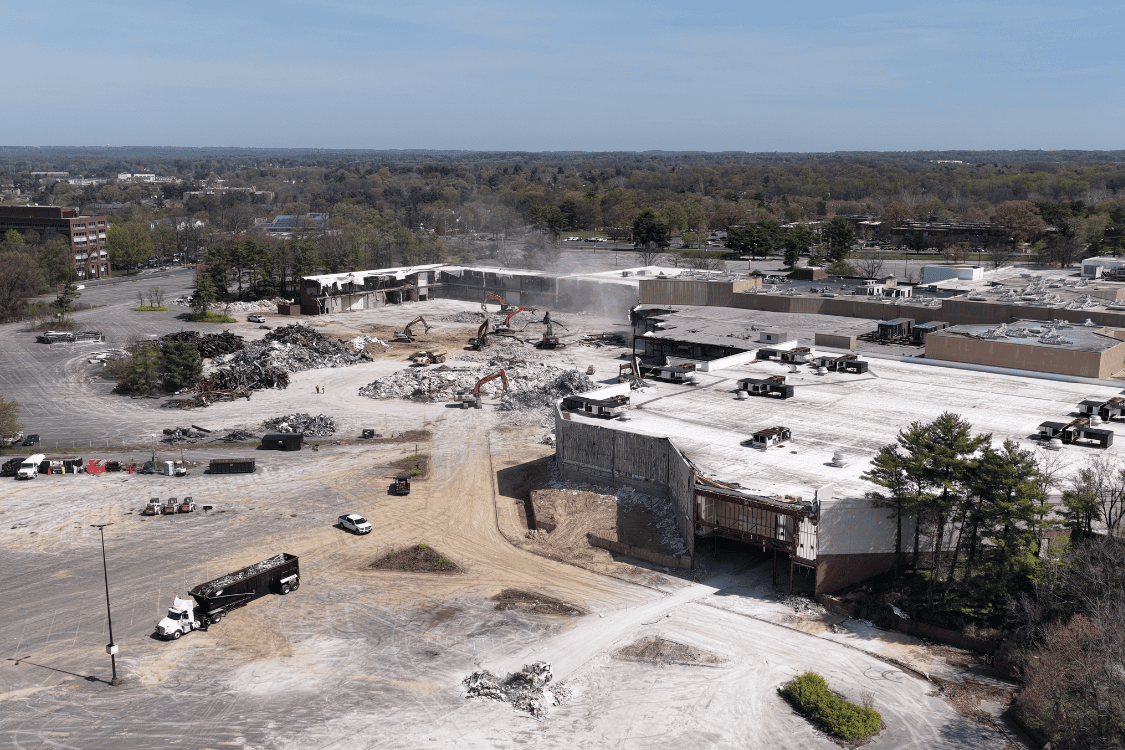
Before any of that could rise, the old mall had to come down. Working for the general contractor Strittmatter Contracting, ISI Demolition led the demolition work on-site: coordinating abatement, structural demolition of four anchor stores, and removal of the entire mall core down to slabs, footings, and foundations.
Why a Mall Demolition Is a Different Challenge
A single office building or warehouse is usually one structure, built to one standard, at one point in time. A mall like Lakeforest is really several buildings stitched together. Anchor stores are often built years apart, by different developers, tied together by a shared core that was designed to connect them, not to come apart cleanly.
Abatement has to happen first, and it’s rarely simple on a property this size. A building built and expanded over decades typically has asbestos-containing materials in different forms in every wing. ISI Demolition oversees that phase of the project, coordinating with a licensed abatement subcontractor and a third-party industrial hygienist to keep testing, clearance, and permitting on schedule before any structural work begins. Only once a space clears abatement can crews move to structural demolition, and even then, each anchor has to be isolated and brought down without compromising the buildings still standing next to it. On a project this size, any one piece falling behind holds up everything downstream.

Keeping the Jobsite Secure
Not every demolition draws a crowd. This one did. Gaithersburg leaders, developers, and elected officials gathered on-site to mark the start of demolition, and Mayor Jud Ashman called it a milestone years in the making. It’s the kind of moment that draws news cameras and residents with real, mixed feelings, some ready for what’s next, others saying goodbye to a place tied to decades of memories.
That kind of visibility raises the bar for how a site gets managed day to day, not just how the work gets done. A high-traffic, high-attention demolition site needs to be secured after hours to keep people out and equipment safe from vandalism or tampering. It also means actively protecting the pedestrians and drivers still using the sidewalks and roadways bordering an active site, through fencing, signage, flaggers, and constant awareness of how the public moves around a property that used to be open to everyone. When a project draws this much attention, there’s very little room for a security lapse or a safety incident to become the story.
What Happens to All That Concrete
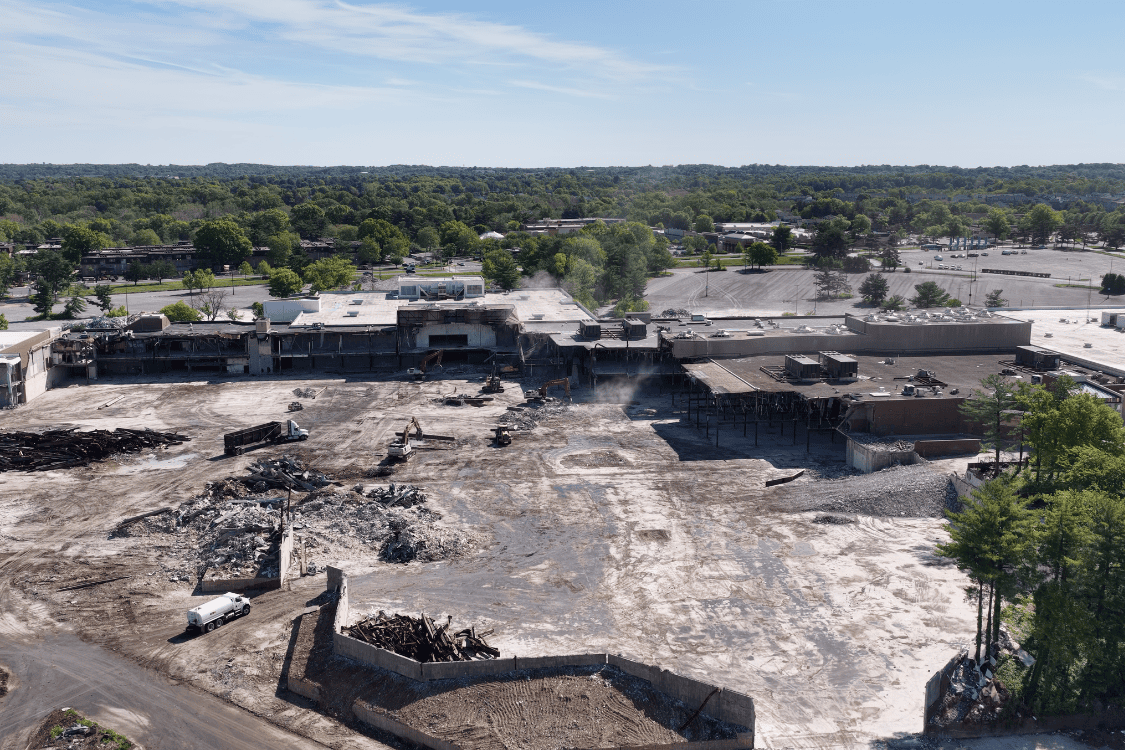
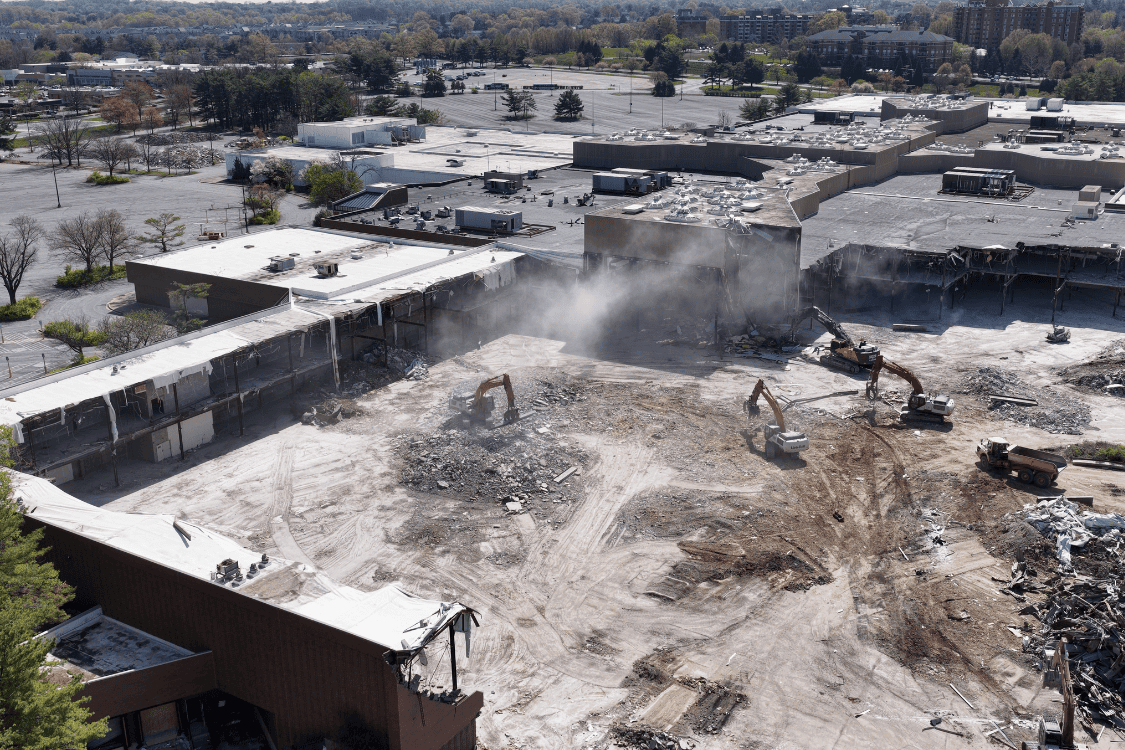
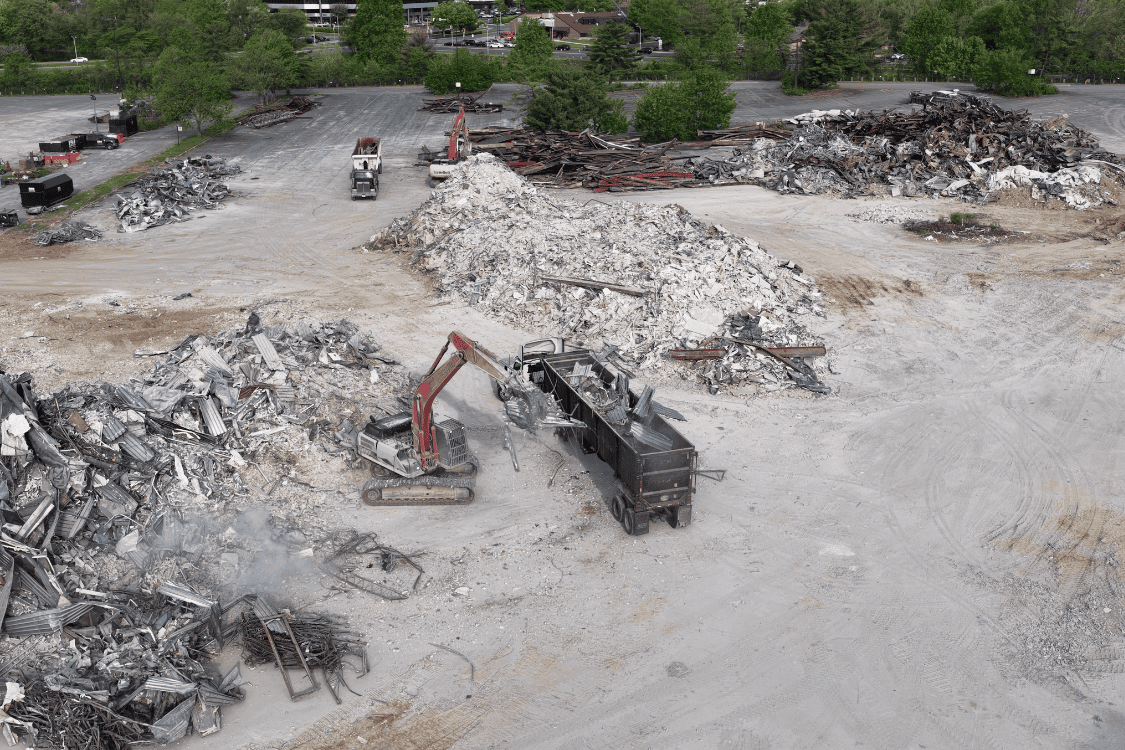
Once a structure comes down, the concrete itself becomes a major part of the job. At Lakeforest, ISI Demolition is crushing and stockpiling concrete on-site so it can be reused for redevelopment, cutting down on hauling and giving the project a head start on the next phase.
That approach is part of a broader practice at ISI Demolition. Reusing and recycling concrete on-site, whenever a project allows for it, reduces landfill waste and keeps material out of the waste stream entirely. On projects where concrete isn’t needed on-site, ISI Demolition makes it available through its own crushed concrete recycling program, supplying recycled aggregate for pickup or delivery across Maryland, DC, Virginia, Florida, and South-Central Pennsylvania. It’s one more way ISI Demolition limits waste from every jobsite, not just the ones where material stays close to home.
Some Walls Stayed Up on Purpose
Not everything at Lakeforest came down right away. Certain sections of the mall structure were intentionally left standing longer than the rest, acting as a windbreak and a physical barrier around ongoing construction activity nearby. Demolishing a site this size in phases, rather than clearing it all at once, meant ISI Demolition’s team had to think beyond just what needed to come down. They also had to think about what needed to stay up, for how long, and why. Leaving the right walls in place at the right time protected work already underway elsewhere on the site from wind exposure and debris, without compromising the schedule for bringing those same walls down later.
Demolition Is the First Phase of Construction
It’s easy to think of demolition as a separate step that happens before “real” construction starts. On a redevelopment project, it’s more accurate to think of demolition as the first phase of construction itself. Every schedule assumption that follows, site work, utilities, foundations, vertical construction, gets built on top of when and how cleanly the site gets cleared. If that first phase runs into trouble, whether from unexpected structural conditions, abatement surprises, or a security incident that shuts down a site, the effects don’t stay contained. They ripple through every phase that comes after.
“Everybody assumes demolition means take it all down as fast as possible. On a site this size, part of the job is having the right team, owning the best equipment, and knowing how to mobilize operations. ISI Demolition is one of the few companies in the country able to deliver a project of this size with the speed and efficiency of our team.”
That’s exactly why the choice of demolition partner matters as much as any other trade on the job. A partner who can sequence the work, coordinate abatement, manage security, and handle material without surprises is a partner who protects the schedule for everyone coming in behind them. In practice, that means time: time that doesn’t get eaten up by rework, time that keeps a redevelopment on pace for leasing, sale, or occupancy targets set months or years in advance.
A Bigger Shift Across Maryland
Lakeforest isn’t an isolated case. It’s part of a much larger shift happening across the state. Maryland currently faces a housing shortage of roughly 100,000 units, and the state comptroller’s office projects the state needs to build close to 590,000 new housing units to meet demand and growth through 2045. At the same time, state leaders have pointed to hundreds of acres of underused land near transit that could be converted into housing and economic hubs, and lawmakers have pushed legislation to open more aging commercial property, like retail centers and office parks, to new development.
There isn’t much greenfield left to build on in the parts of Maryland where people actually want to live. The path forward runs through property that’s already built. Half-empty malls, outdated retail centers, office parks that have outlived their original purpose: converting all of it starts the same way every time, by clearing what’s there safely and on schedule.
Where ISI Demolition Fits In
For general contractors and commercial real estate owners navigating development in Maryland, having the right demolition partner carries real weight. Redevelopment work like Lakeforest requires more than heavy equipment. It takes a team that can manage structural complexity across multiple connected buildings, coordinate abatement safely across a large and varied footprint, secure a site under public attention, and handle material responsibly, all without outsourcing the pieces that matter most. ISI Demolition owns its fleet, employs its own engineers, and has built decades of experience doing exactly this kind of work, from a single interior gut to a 100-acre mixed-use redevelopment.
As more of Maryland’s aging commercial real estate gets a second life, that combination, the technical capability to bring a property down cleanly and the discipline to protect the schedule every step of the way, is exactly what a redevelopment partner needs to bring to the table.