
Project Summary
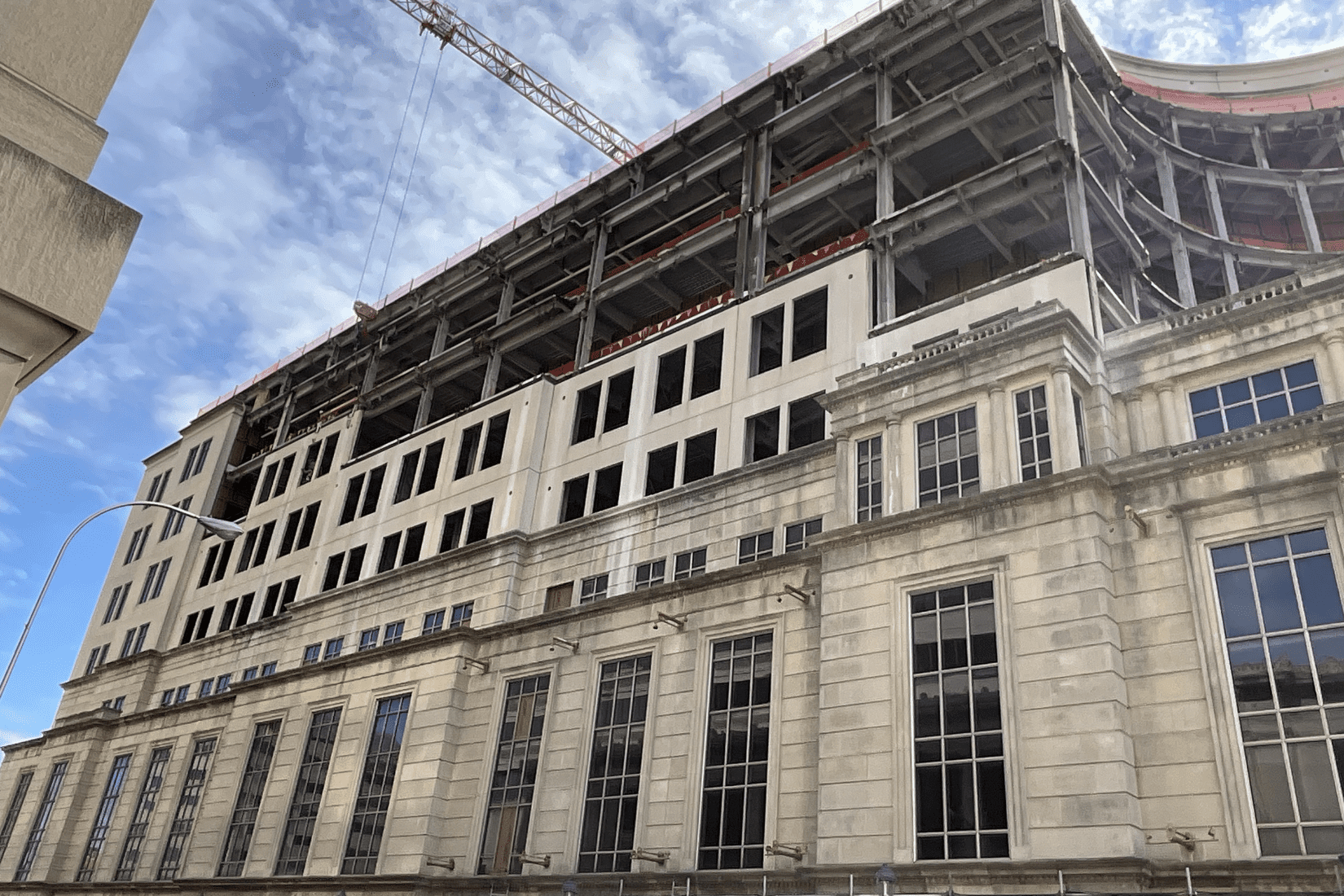
- 10-story office building demolition
- Dense downtown Wilmington, DE location
- Limited access with active pedestrian and traffic conditions
- Structural and façade removal requiring engineered sequencing
- Controlled drop zones and on-site material processing
- Completed ahead of schedule
- Zero incidents, no dropped loads, and full compliance with site-specific safety protocols
Incyte Redevelopment in Downtown Wilmington
The Incyte Redevelopment Project centers on the transformation of a former Bank of America office complex in downtown Wilmington, Delaware. This is part of a larger effort to reposition long-vacant corporate office space for new uses in the city’s core.
To prepare the building for its next phase, ISI Demolition was selected to perform structural and interior demolition as part of the redevelopment process. The work required more than removal. This project demanded a carefully engineered approach to dismantle key building components while preserving surrounding structures and maintaining safety in a highly active urban environment.
The Challenge of Structural Demolition in a Dense Urban Environment
With the project located in the center of downtown Wilmington, site conditions quickly defined the approach.
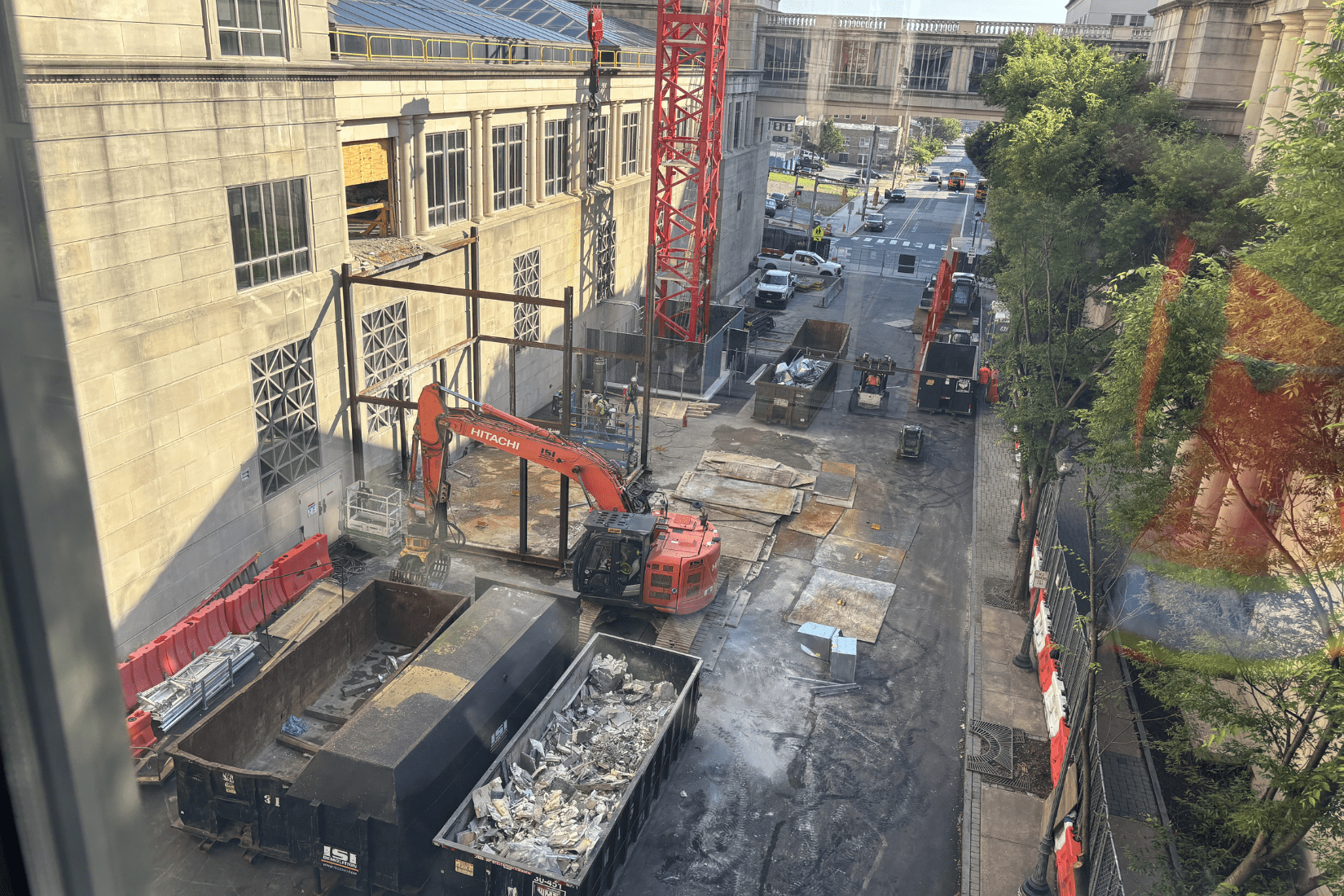
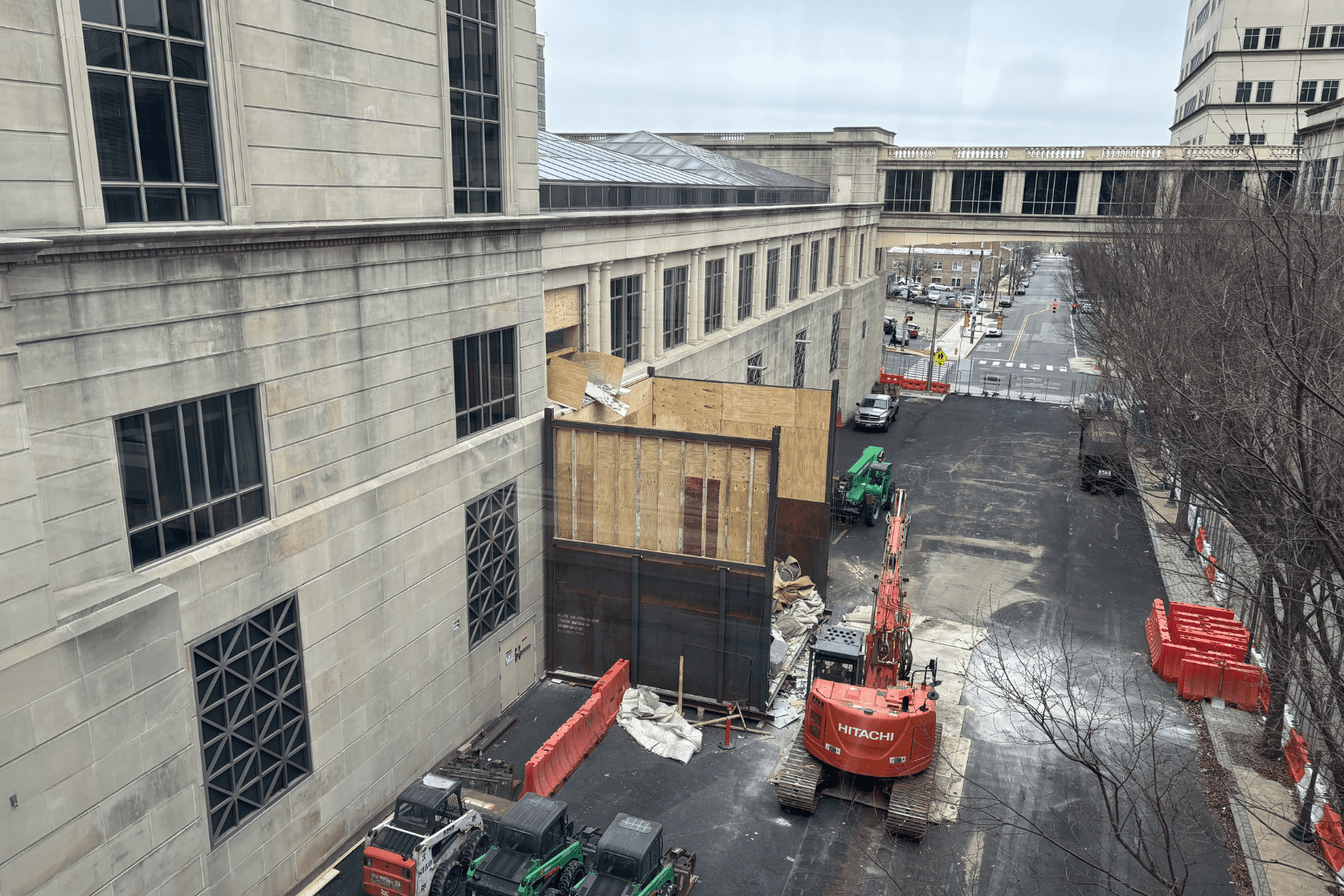
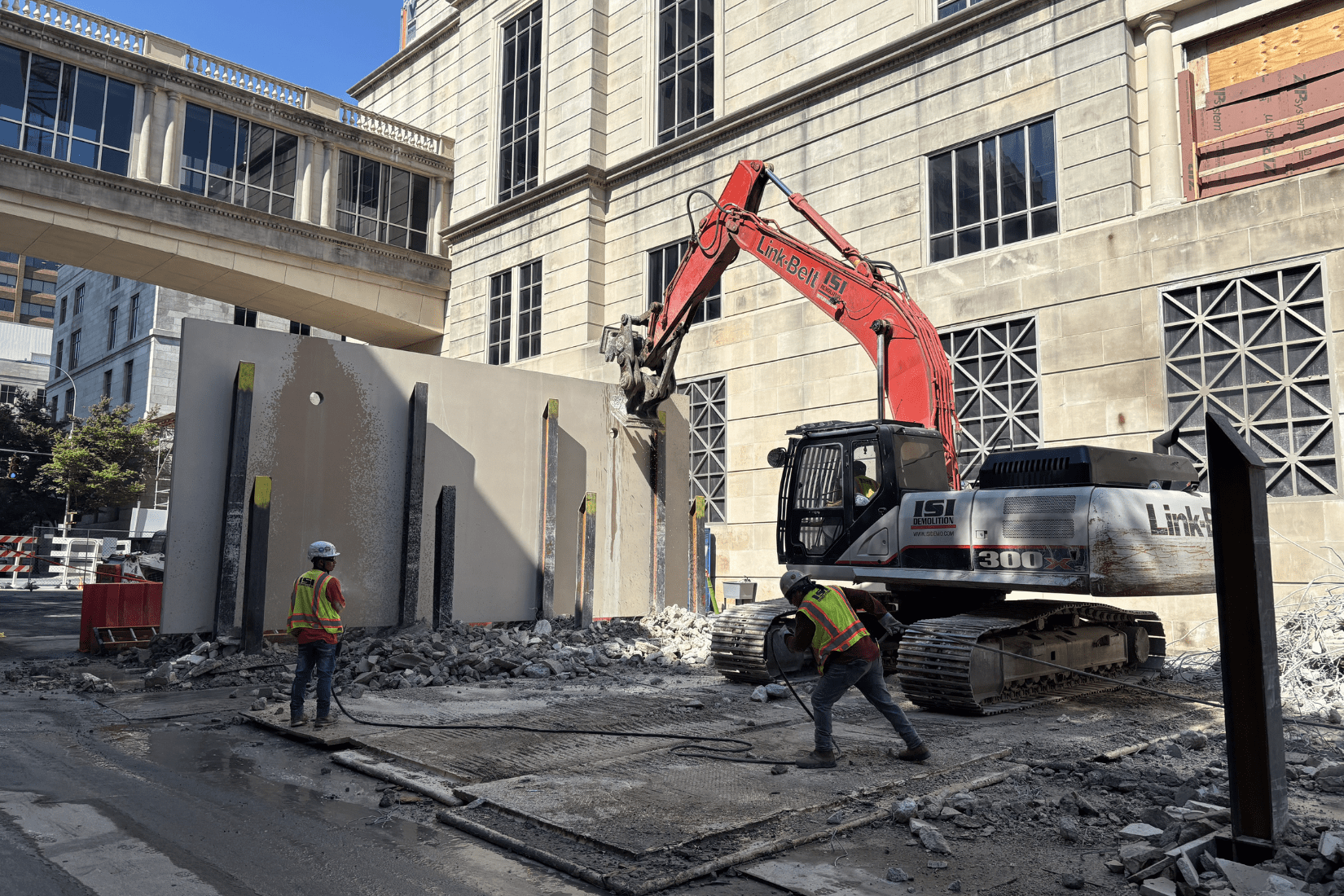
Active sidewalks bordered multiple sides of the building, and nearby structures remained occupied throughout the work. Access was extremely limited, with no traditional staging area available. The only viable solution required controlled use of the roadway between buildings—turning it into the primary zone for staging, demolition activity, and material handling.
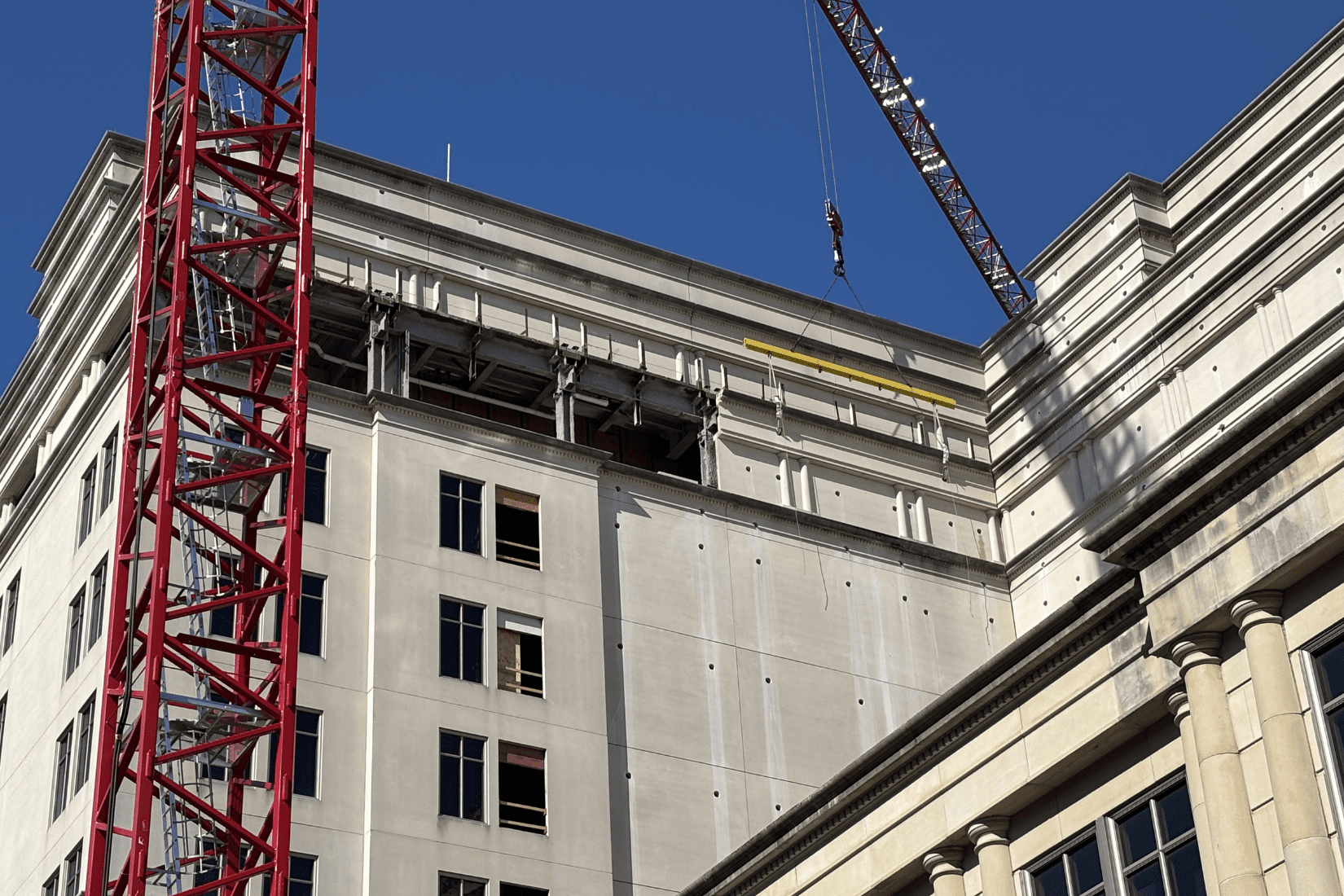
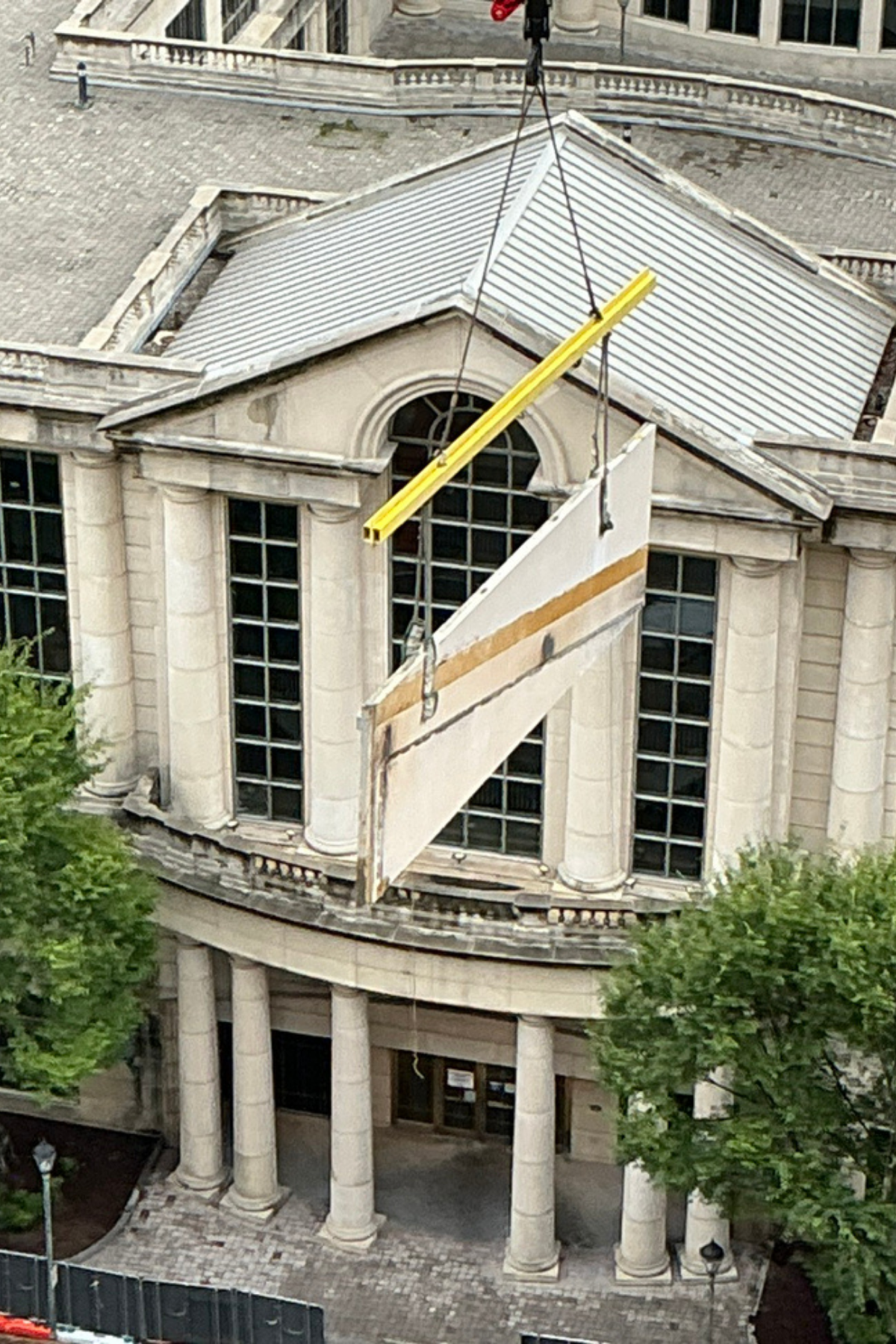
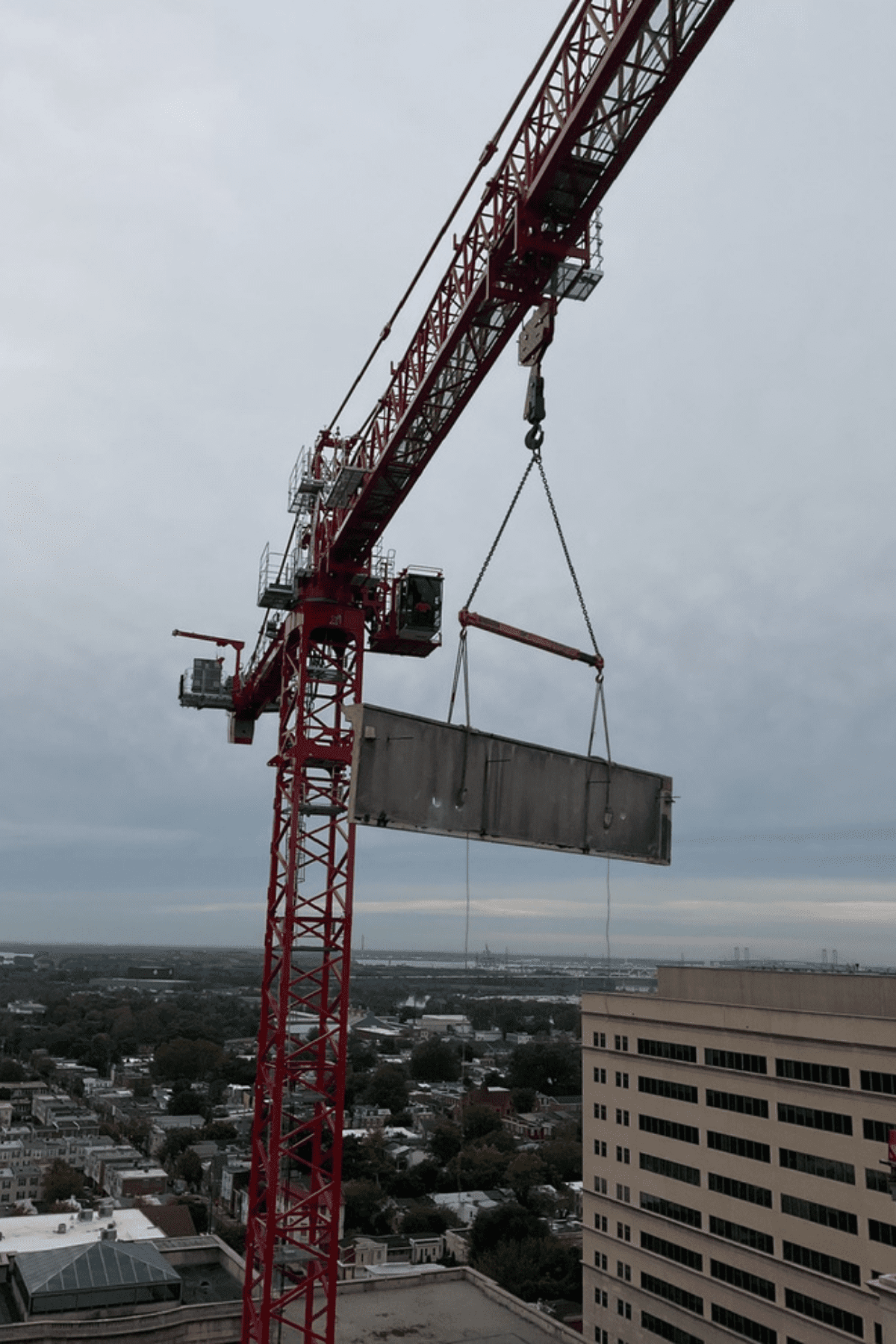
In addition to logistical constraints, the structure itself required careful handling. Large precast façade panels and portions of the upper structural framing needed to be removed in a controlled manner to avoid impacts to the remaining building and surrounding properties.
Engineering the Demolition Approach
Given the constraints, success depended on planning before execution began.
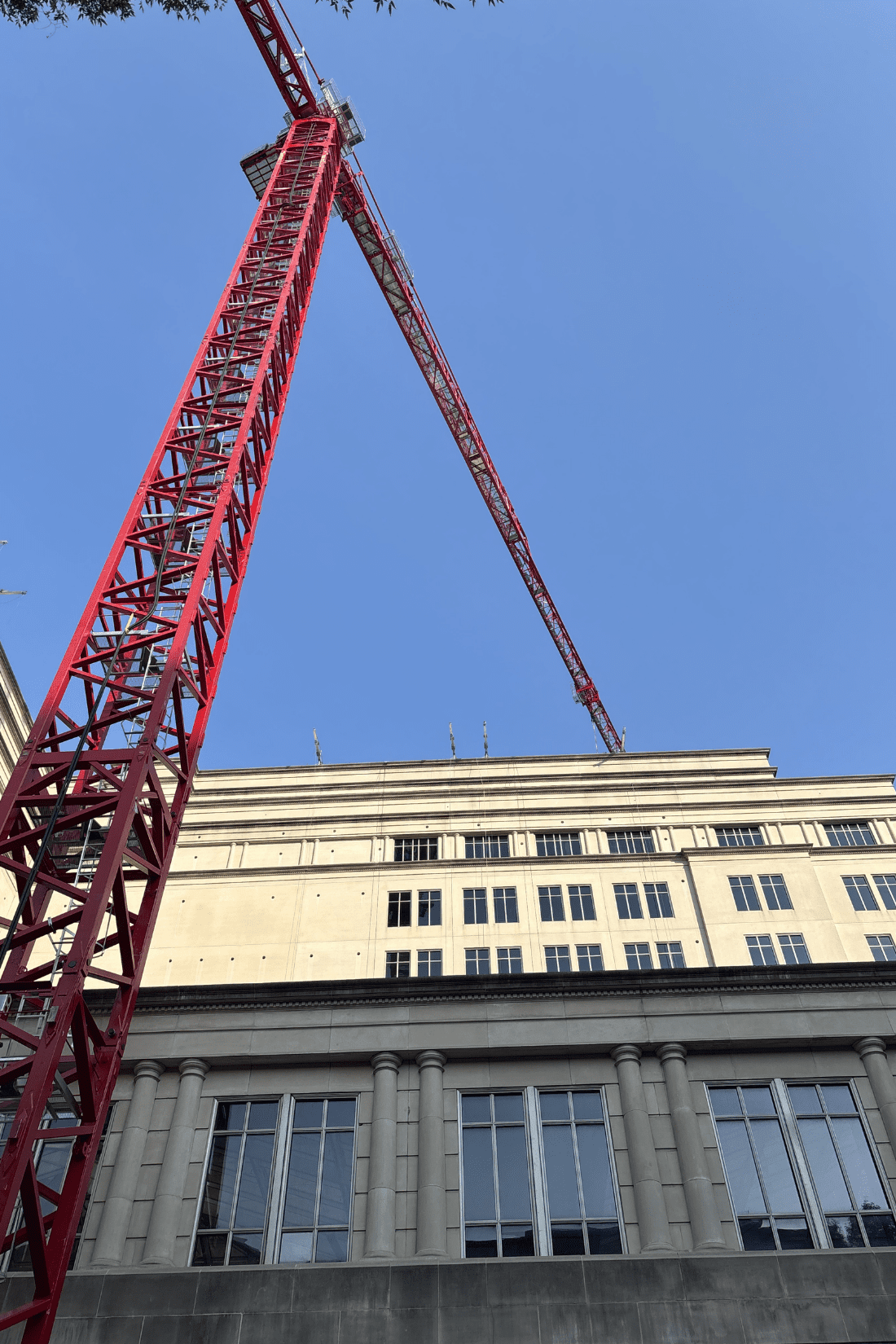
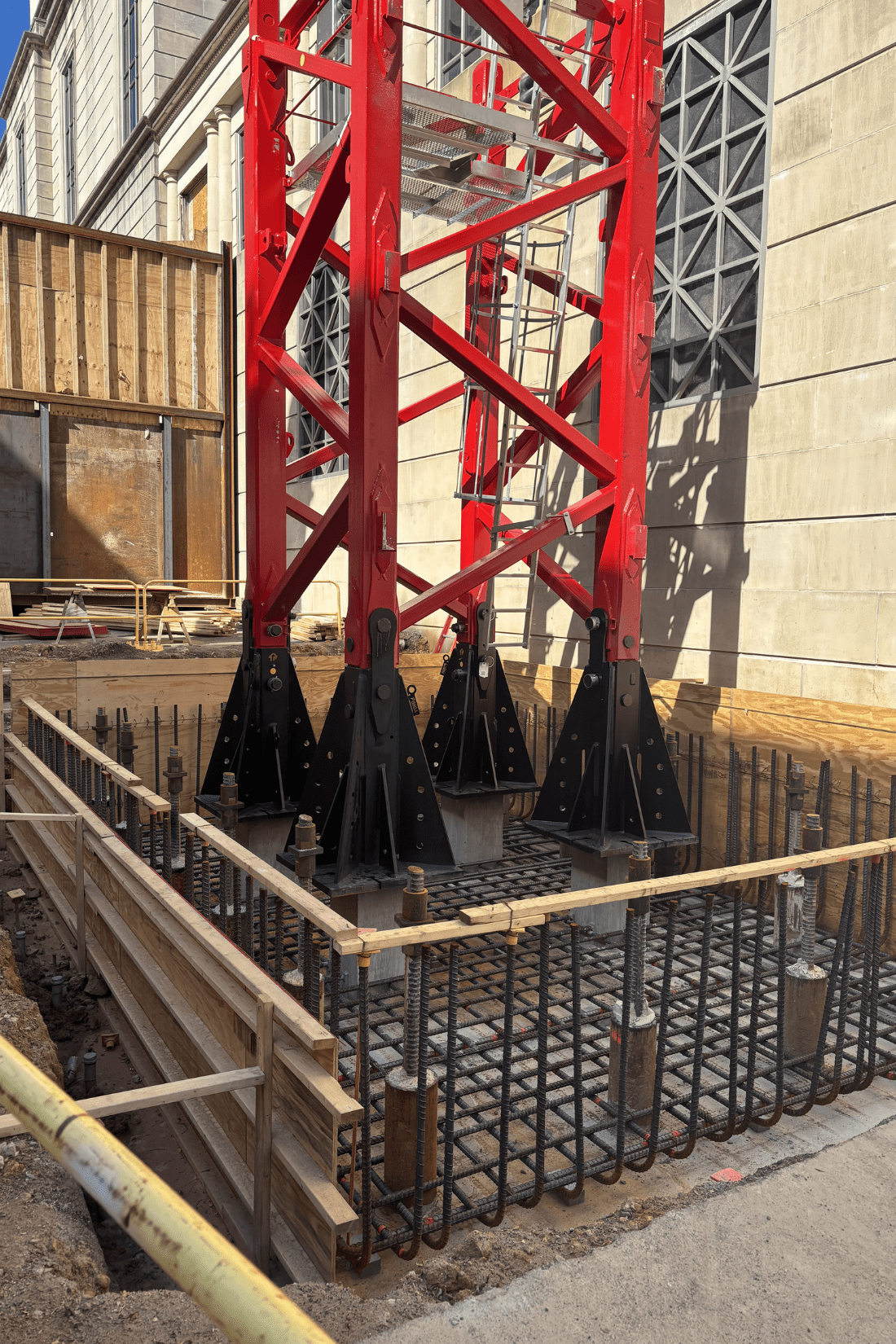
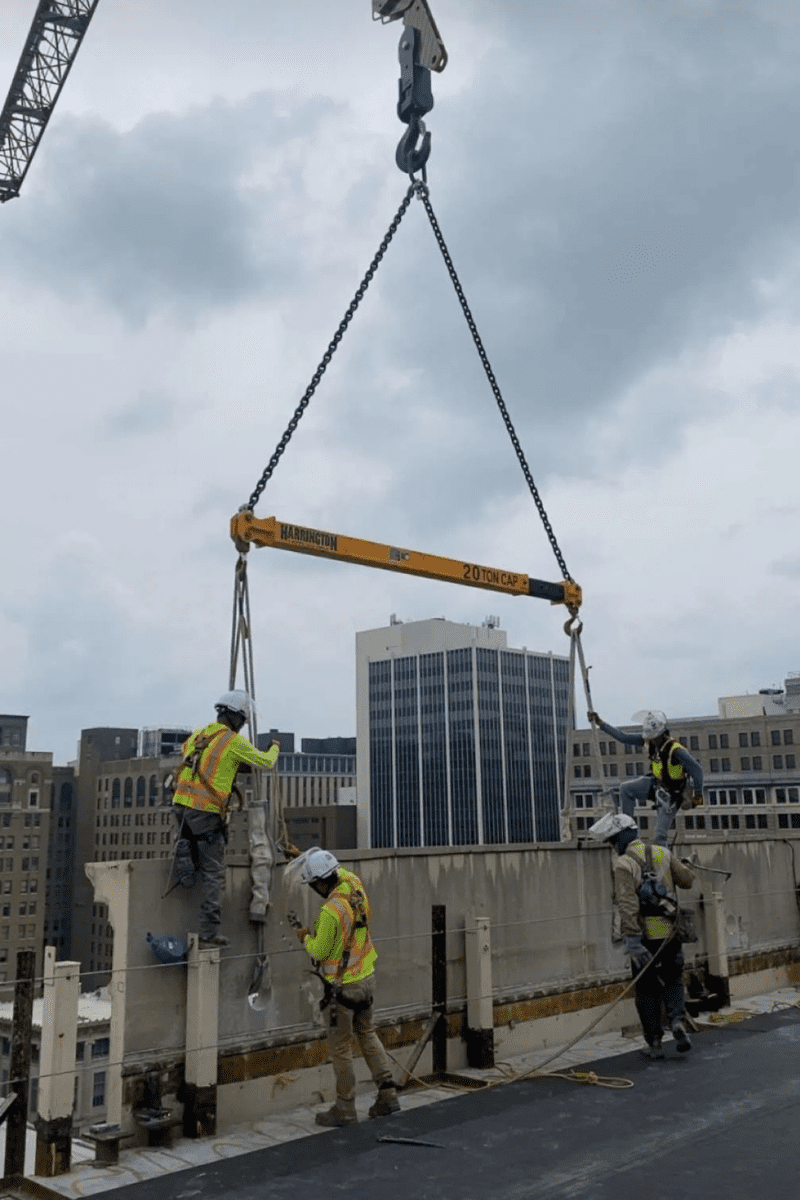
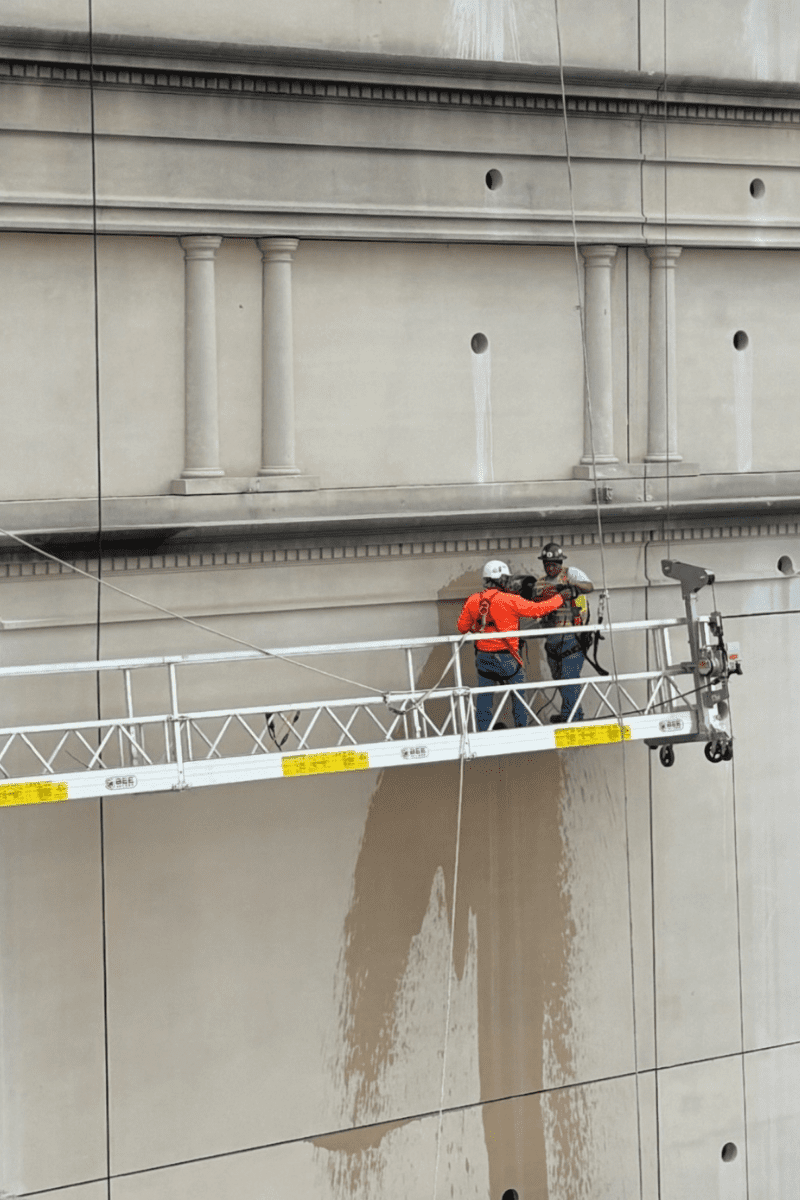
ISI Demolition developed detailed pre-construction engineering plans to address sequencing, structural stability, and equipment limitations. Crane picks, rigging systems, and temporary shoring were designed to safely manage the size and weight of each component as it was removed.
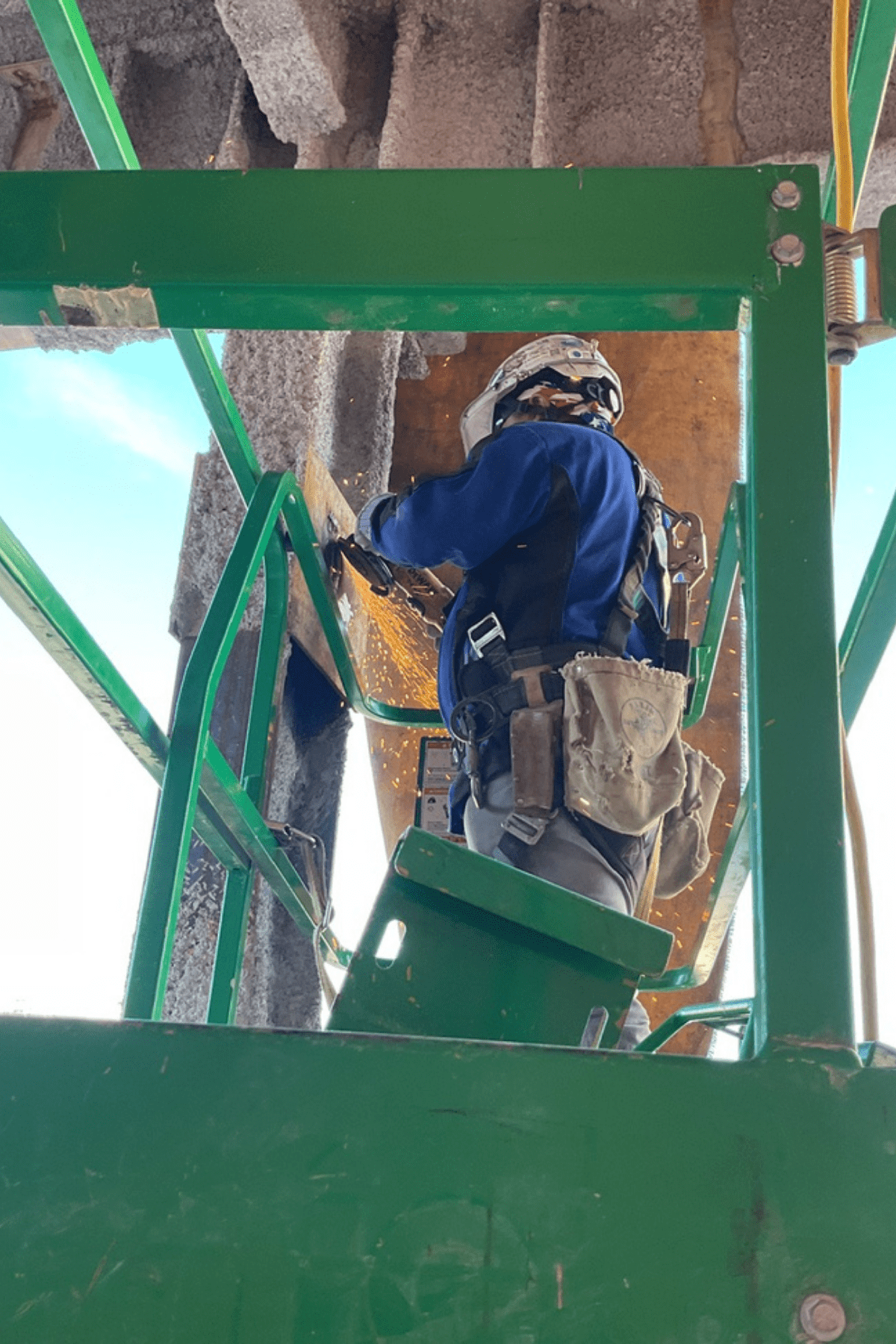
Execution relied heavily on ISI Demolition’s in-house ironworkers, who played a critical role in the removal of large precast façade panels. Working closely with the project team, they coordinated rigging, connections, and sequencing to ensure each panel could be safely released and controlled during crane picks.
To work within the limited footprint, the team also established a controlled ground-level landing and processing zone—allowing demolition materials to be handled entirely within the designated work area. Internal building features were leveraged, and demolition activities were sequenced to maximize efficiency despite restricted access.
Execution in a Live Urban Environment
With planning in place, execution focused on coordination.
Crews worked within tight access conditions, balancing demolition progress with pedestrian safety, traffic control, and the needs of surrounding occupied buildings. Each phase of work was carefully sequenced to maintain momentum without introducing unnecessary risk.
In environments like this, demolition is as much about communication and control as it is about removal.

Safety in Practice: Fall Protection and Site Controls
Safety planning extended beyond engineering and into daily execution.
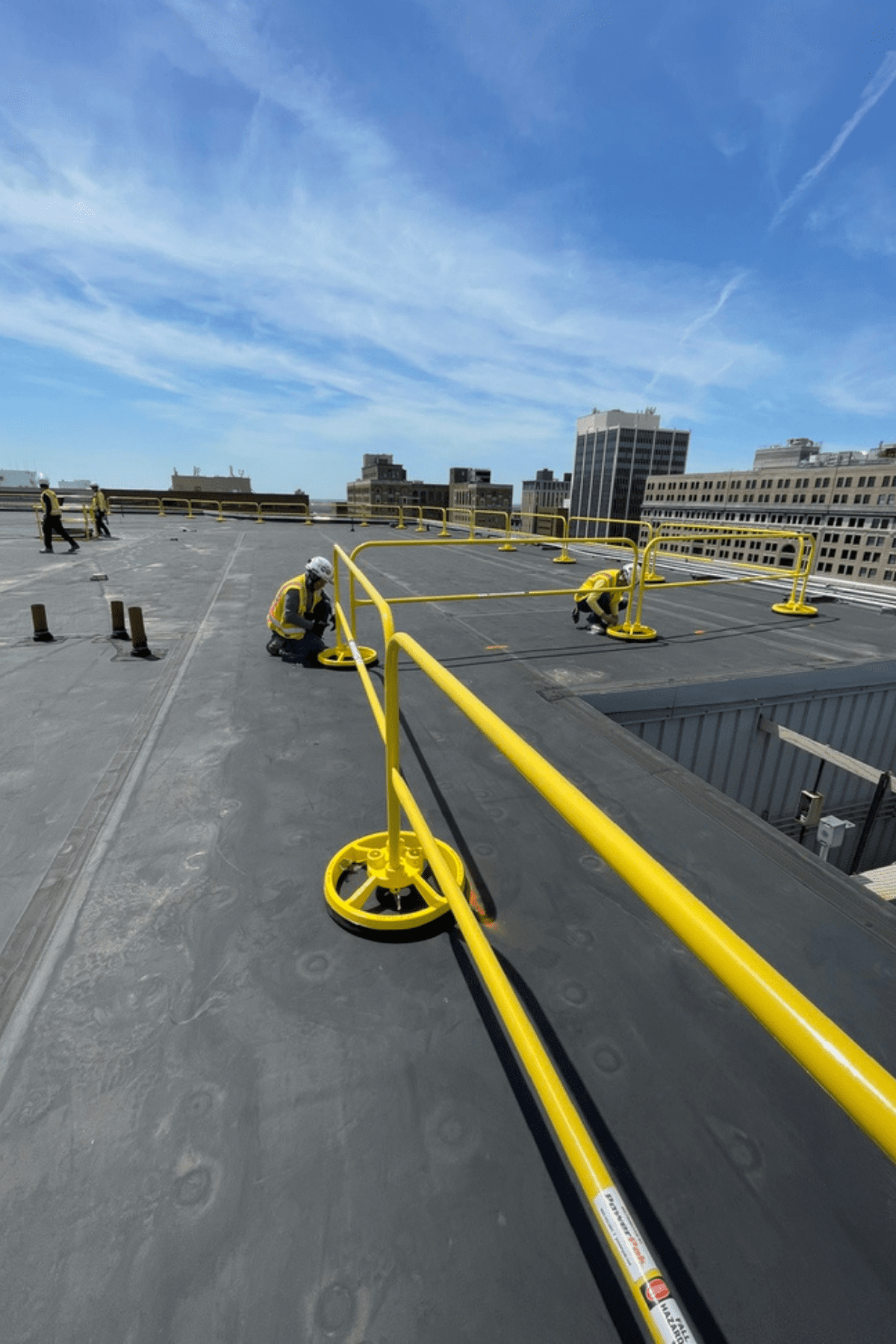
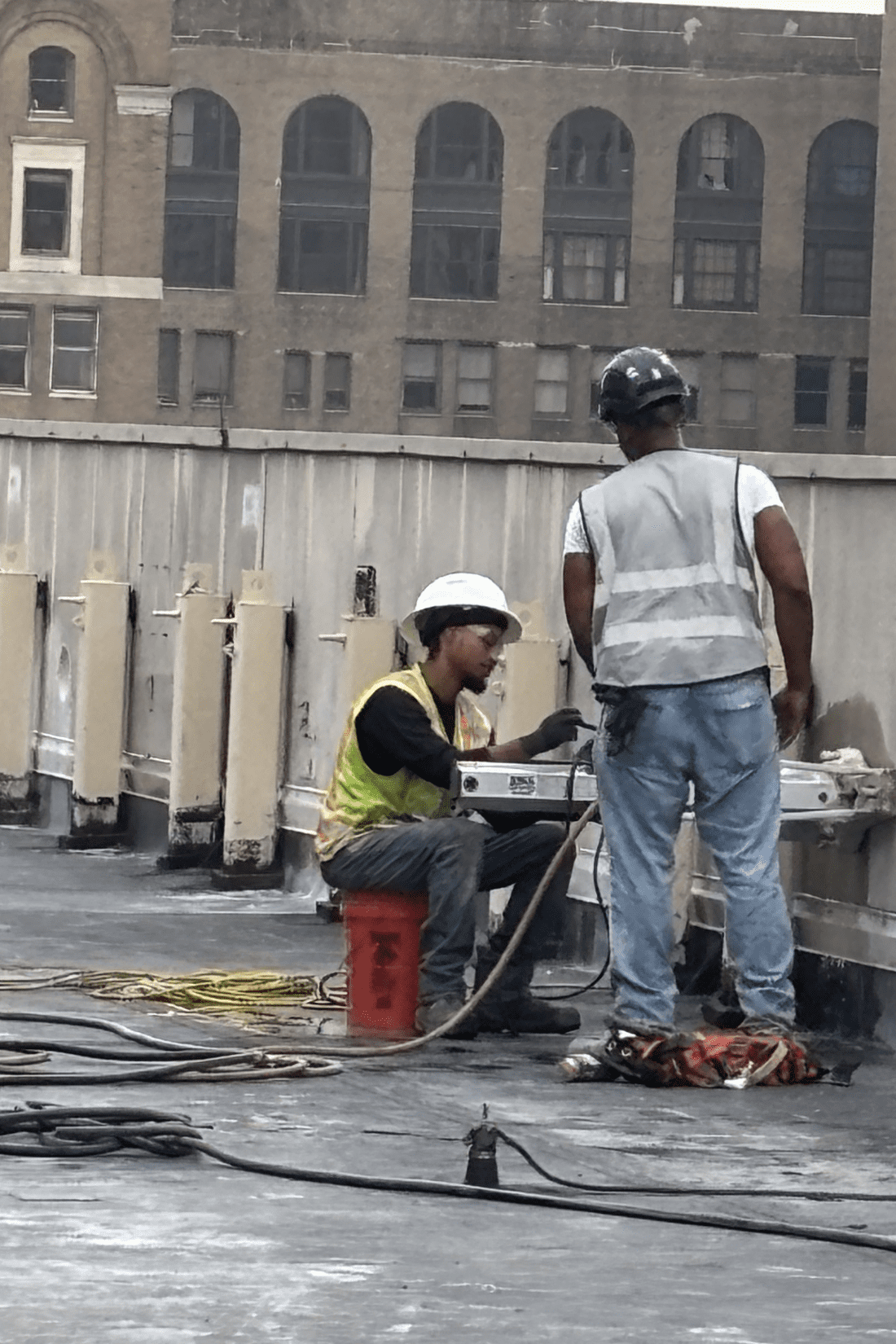
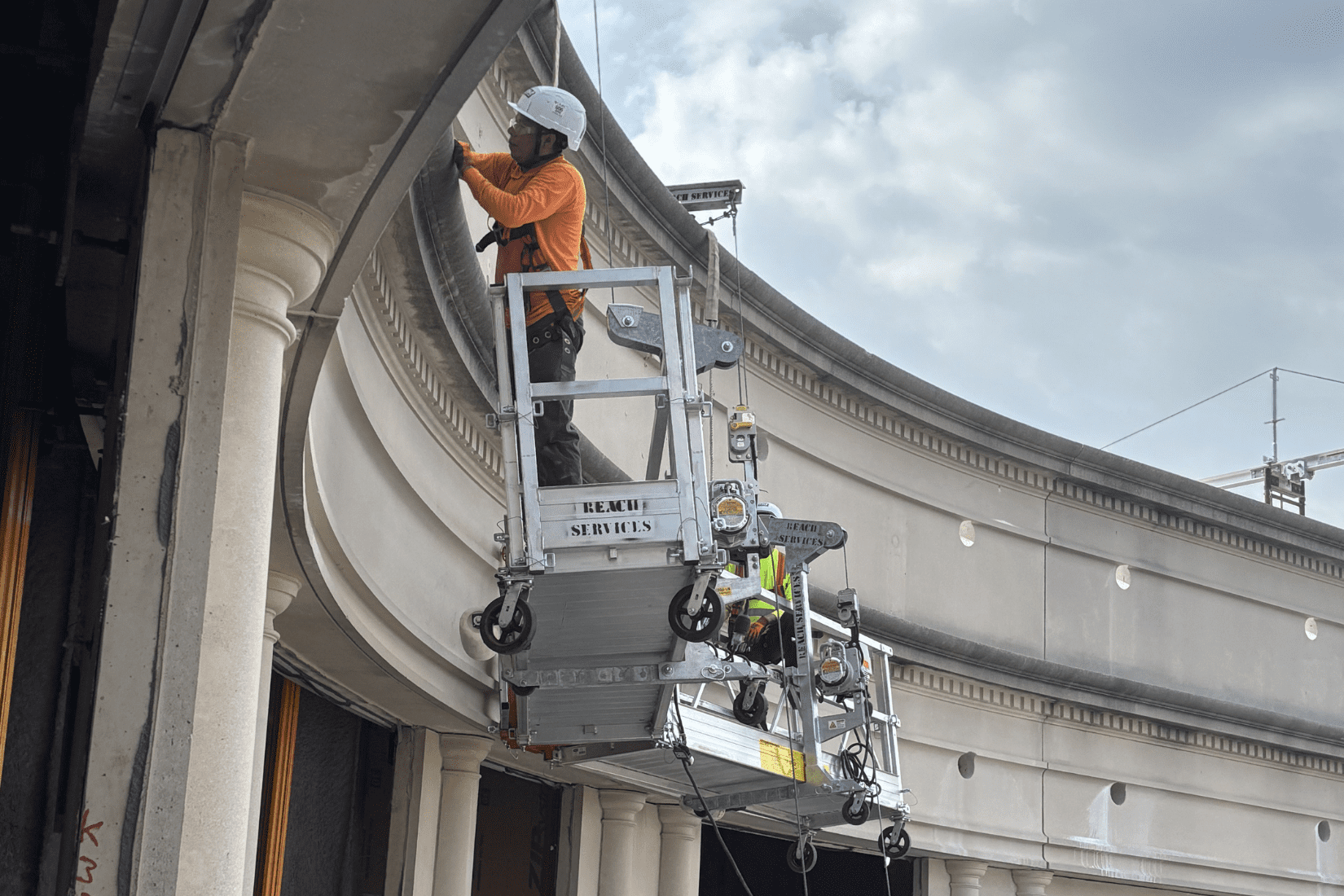
To protect crews working at height, guardrail systems were installed along roof edges and other leading-edge conditions—creating controlled work zones and reducing fall risk. Coordination with ironworkers and field crews ensured these protections were installed early and maintained as work progressed.
This proactive approach allowed demolition activities to move forward safely, even in areas with significant exposure risks.
Precision Preparation with In-House Core Drilling
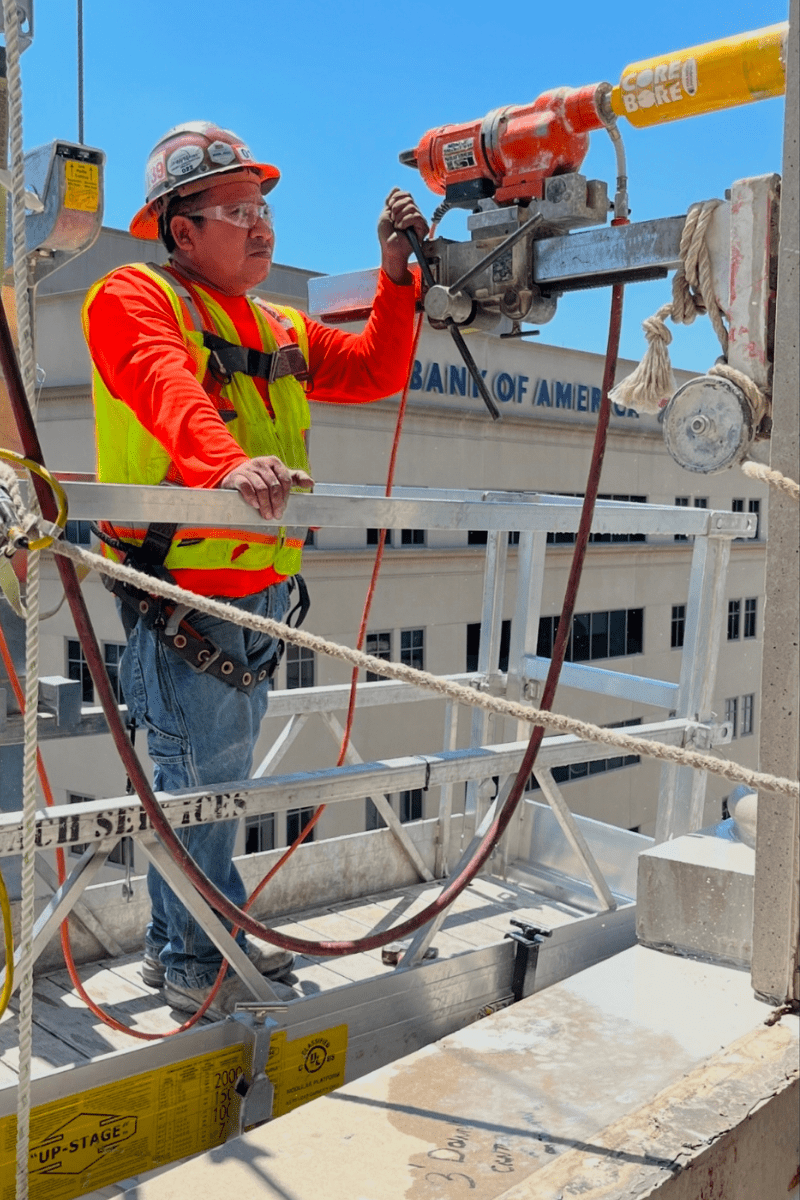
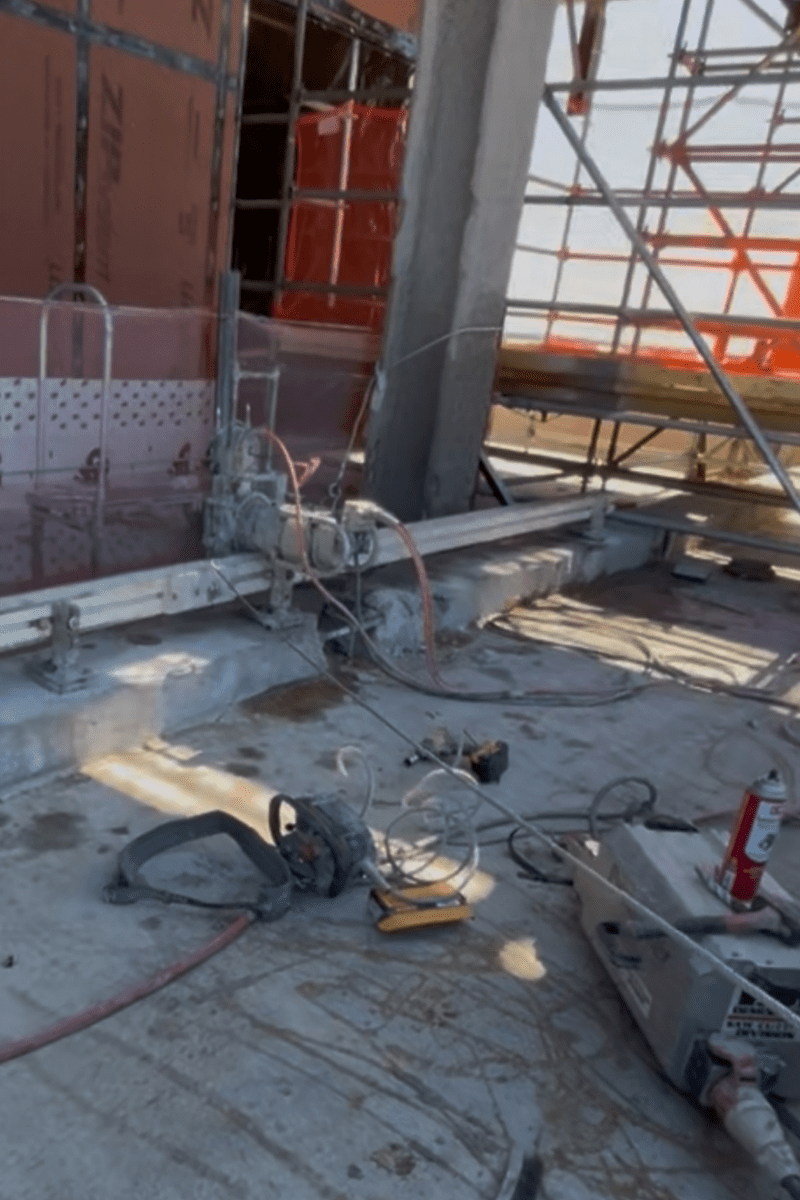
Before major structural elements could be safely removed, ISI Demolition’s in-house saw cutting team performed precision core drilling throughout the structure.
These drilled access points allowed crews to securely attach rigging and lifting cables, creating controlled pick points for crane operations. By preparing each element in advance, the team was able to lower large structural components safely and efficiently—an essential step in maintaining control within the tight confines of the site.
Controlled Demolition with Dust Management
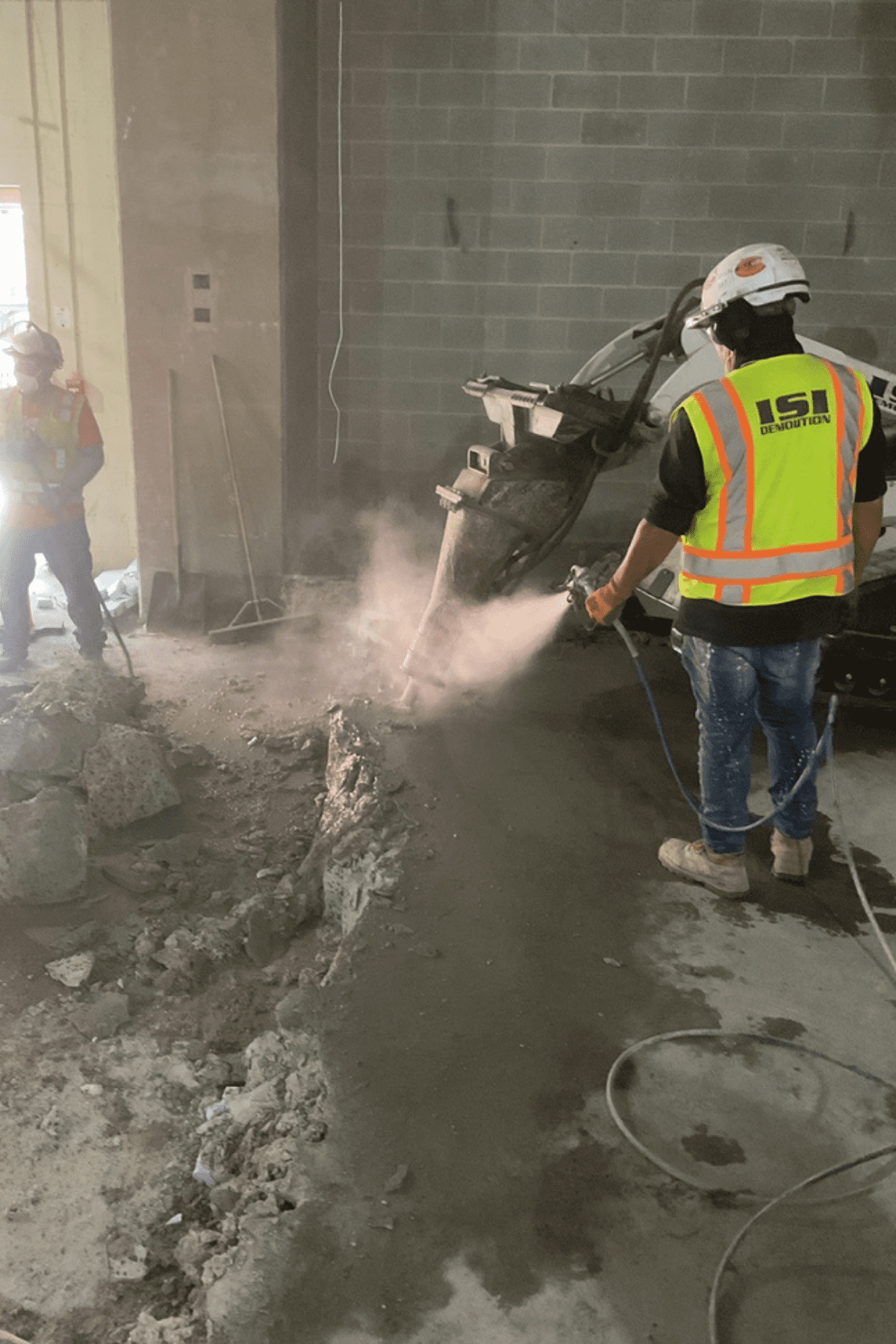
Inside the structure, ISI Demolition utilized robotic equipment to perform selective demolition in confined areas.
During these operations, dust control measures were implemented to maintain visibility, protect workers, and limit the impact on surrounding areas. By combining remote-operated equipment with active dust suppression, the team was able to complete interior demolition efficiently while maintaining a controlled work environment.
Demolition For Office Building Redevelopment
Projects like the Incyte Redevelopment reflect a broader shift in how office buildings are adapted for modern use. Rather than full teardown, architectural demolition is often used to reshape existing buildings—opening floor plates, removing façade systems to introduce natural light, and creating the flexibility needed for new layouts and uses.
This approach allows owners and developers to reposition properties more efficiently while aligning with current expectations for workspace design and functionality. It also requires a demolition partner who understands how their work fits into the larger construction and redevelopment process.
The Outcome
Through careful planning, engineering, and execution, ISI Demolition completed the project ahead of schedule—allowing redevelopment efforts to move forward without delay.
The project highlights the importance of experience in constrained environments, where safety, sequencing, and coordination directly impact project success.
Start the Conversation Early
Projects like the Incyte Redevelopment highlight the value of early collaboration—especially when structural complexity and site constraints are involved.
ISI Demolition works alongside owners and contractors from the start, helping identify challenges, align the approach, and keep projects moving forward.
